The “B” Word
Words and pictures by Michael Sweeney
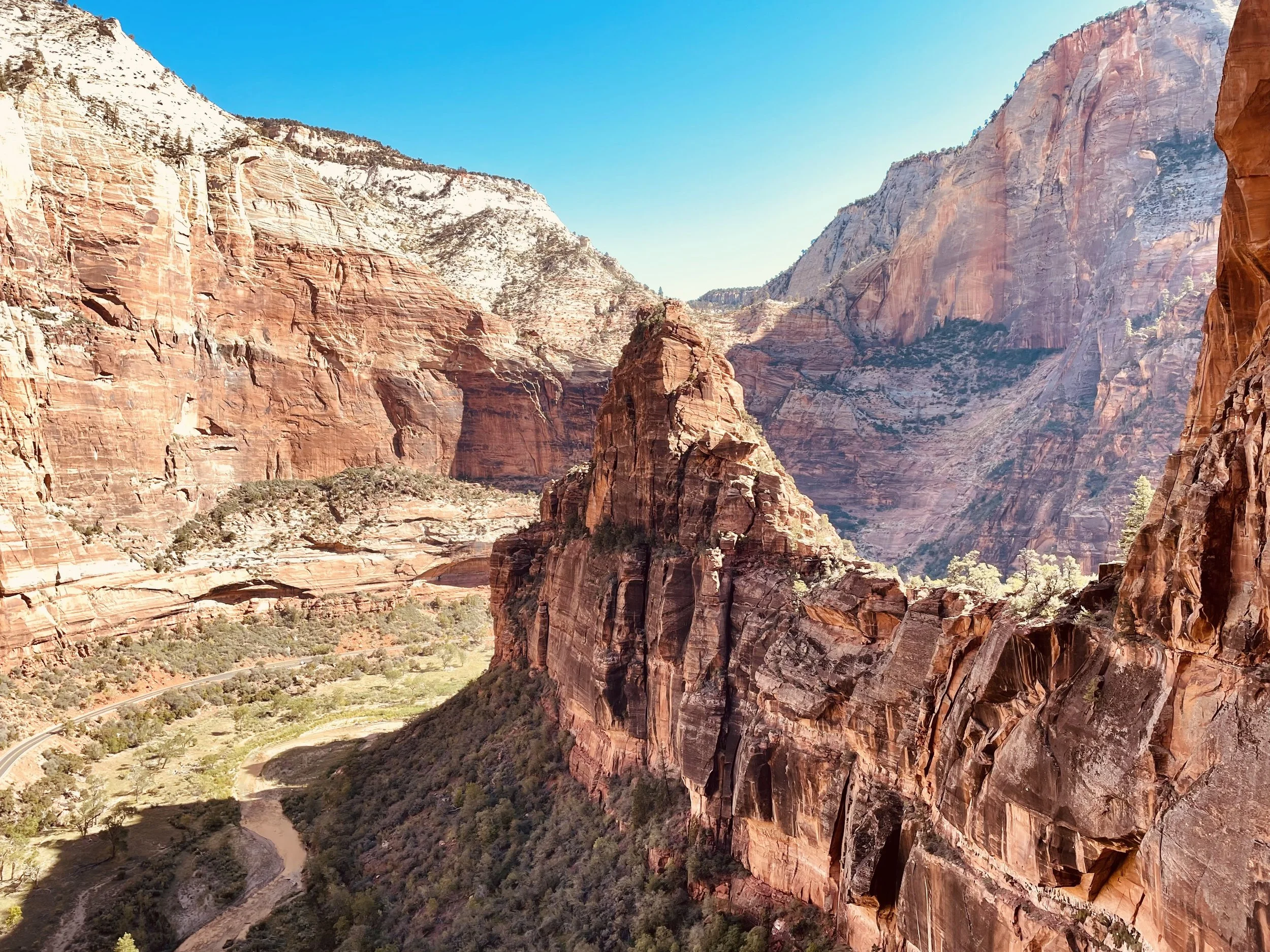
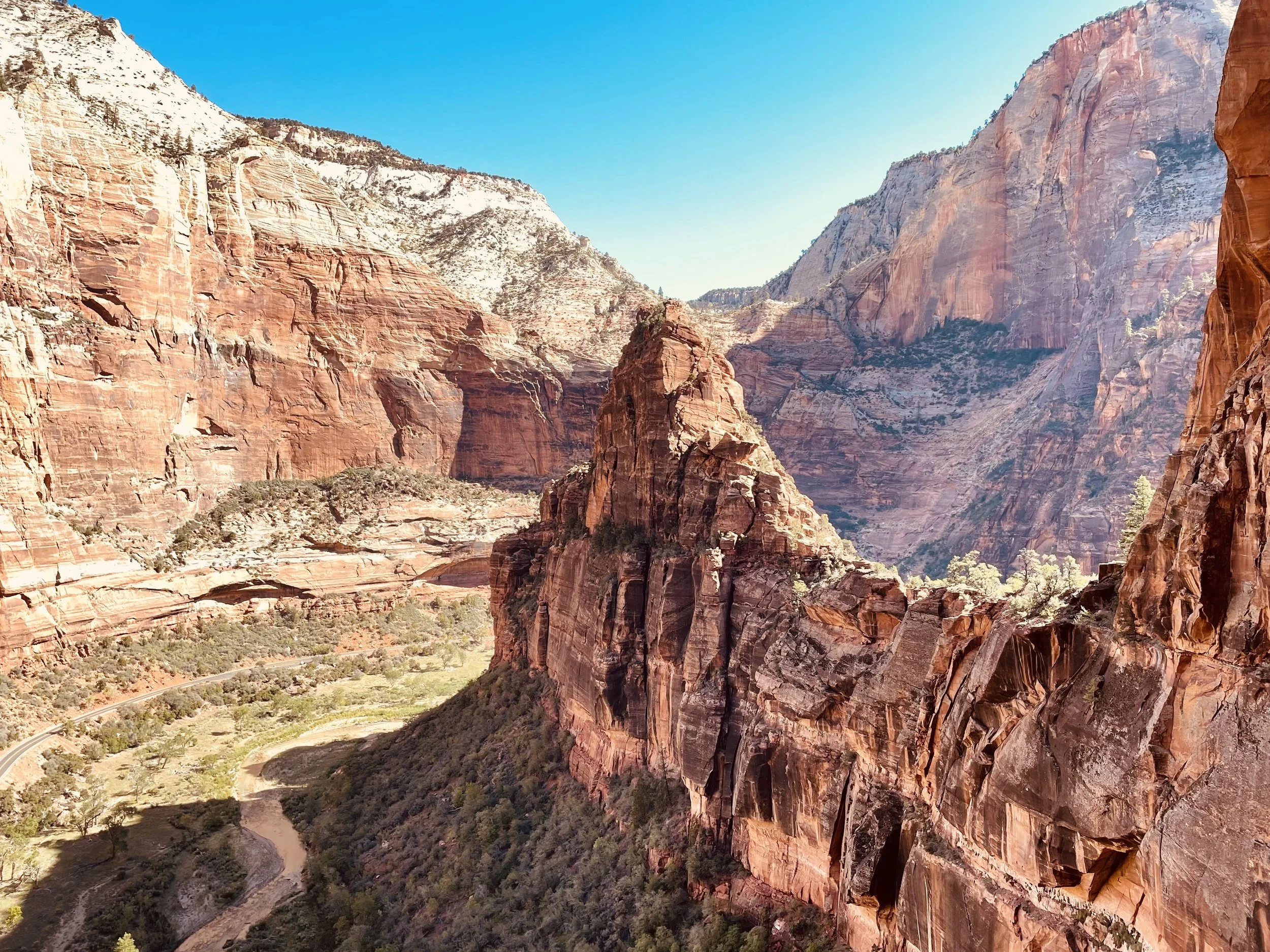
Midday sun lights up the Zion sandstone.
I look down at my feet, and what I see with my eyes matches the sensation roaring its way through my nervous system. I'm giving my toes a break from my climbing shoes, and although they are red, swollen and stiff, it's the skin on the bottom of my feet causing the most discomfort. The sand out here works its way into everything, including your shoes, and the added friction of a thin layer of sweat and sand inside a climbing shoe has turned my feet into puffy red balloons.
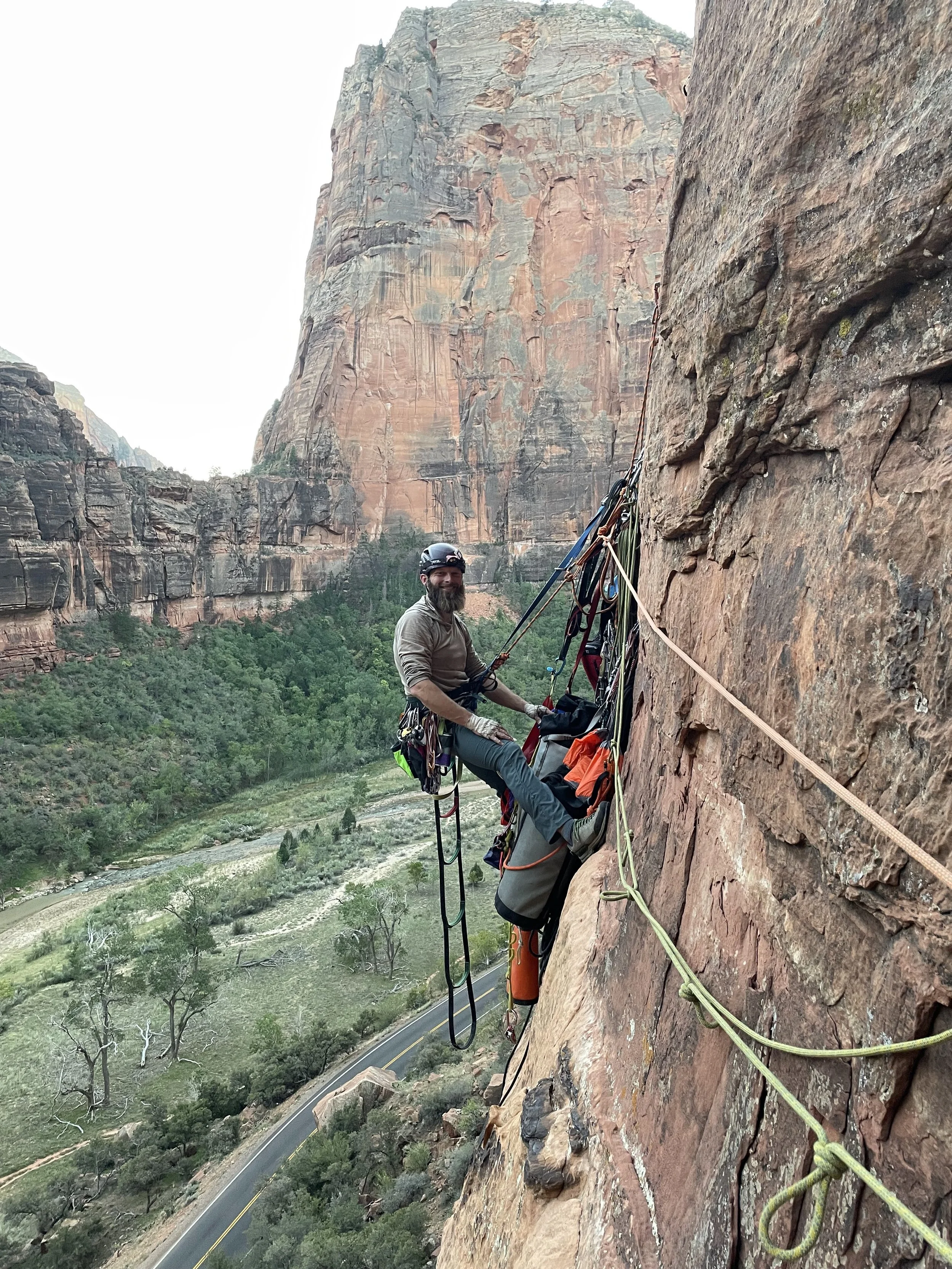
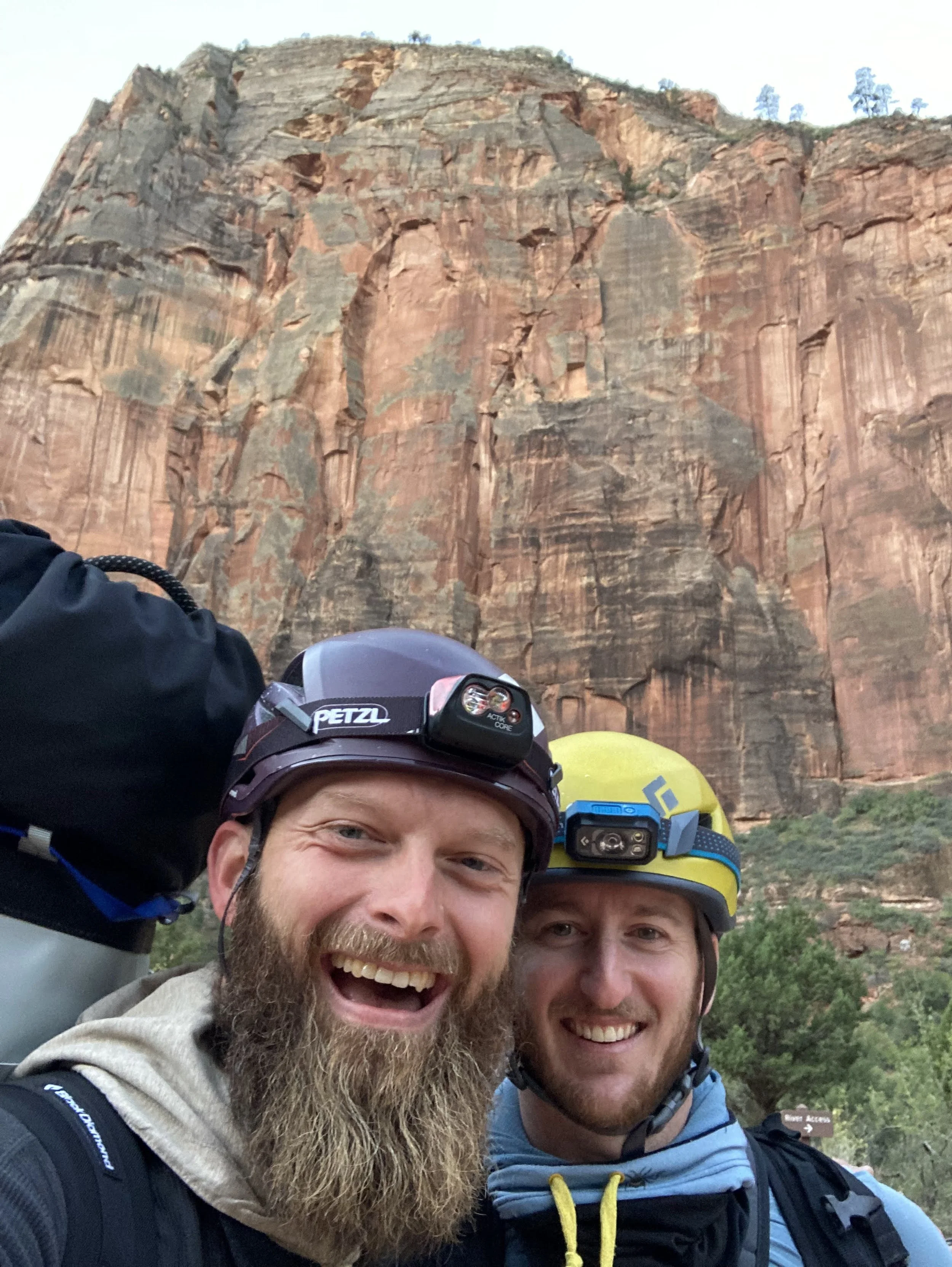
I'm at the top of the fifth pitch of Touchstone, on a comfy, spacious bivy ledge on one of Zion National Park's trade routes. My partner Jason is ascending a fixed line I've attached to the beefy chain anchor, a luxury of trade routes, while I haul our food, water, gear and beer up from the anchor below. The haul bag grinds to a halt at my feet. Haul bags have a magical ability to get heavier despite the fact they are steadily being emptied of their contents.
Bivy: short for bivouac, a makeshift camp on a ledge or otherwise unsuitable location to get a solid 8 hours of sleep. Trade route: a heavily trafficked climbing route, with good anchors and lots of beta (information).
Pitch five was supposed to be Jason's lead, as the route beta called for a beautiful wide hands crack ascending off the fourth pitch ledge. On most big wall trips, few things go according to plan, and this trip was no exception. At the top of the third pitch, Jason began complaining of dehydration and lamented the position of this route in the direct October sun. We spent some focused minutes hydrating and eating, and afterwards I cast off out into the fourth pitch. By the time Jason arrived at the fourth pitch belay an hour later, it was obvious he was having a heat stroke. We positioned Jason between the haul bag and the sandstone wall in a futile attempt to get him out of the sun, and before long our situation worsened.
"Mike, hand me one of those wag bags," Jason said.
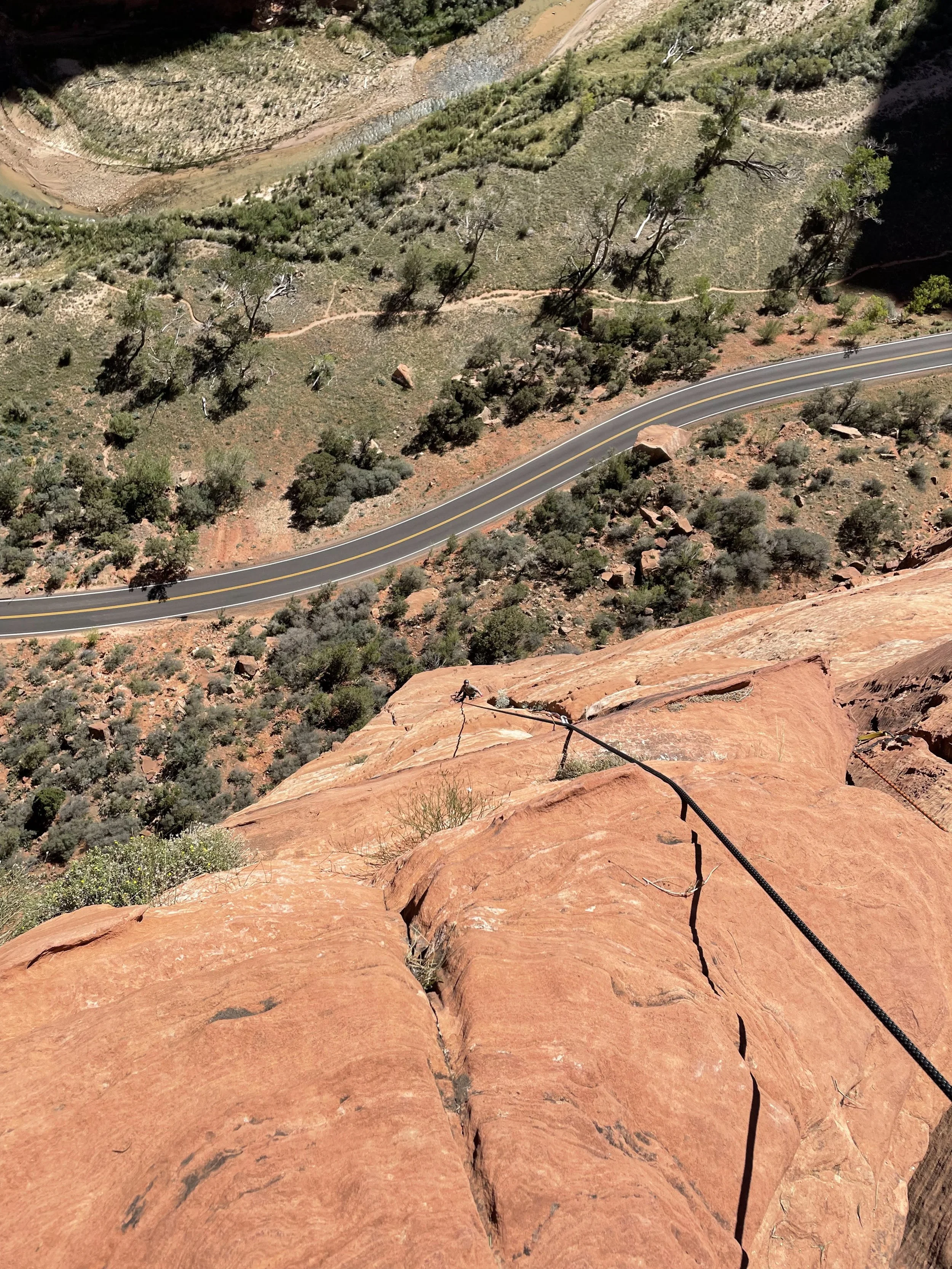
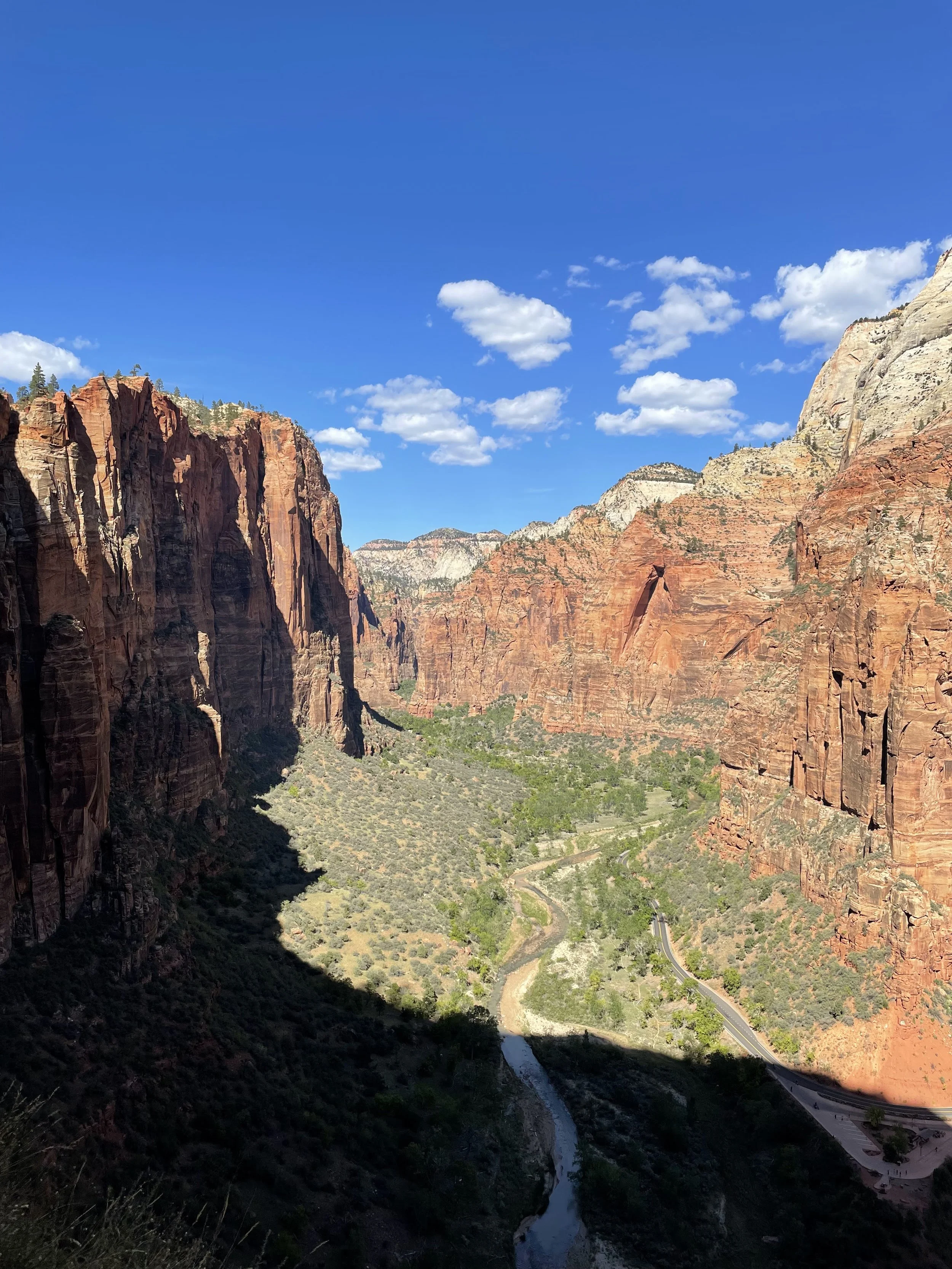
On a wall, duty will call, and never at an opportune moment. While Jason relieved himself into a wag bag, I waved to the tourists on the road brandishing their digital cameras upwards at us. Somewhere on an unsuspecting hard drive is a picture of the sorry pair of us, complete with Jason hunched on the ledge, pants around his ankles.
I started sizing up the next pitch, and it wasn't long before we decided I would take it. I distinctly remember the beta saying "take the left crack," but it's likely this stemmed from my desire to avoid Jason's side of the ledge. I threw the lead pack onto my shoulders and cast off in the complete wrong direction.
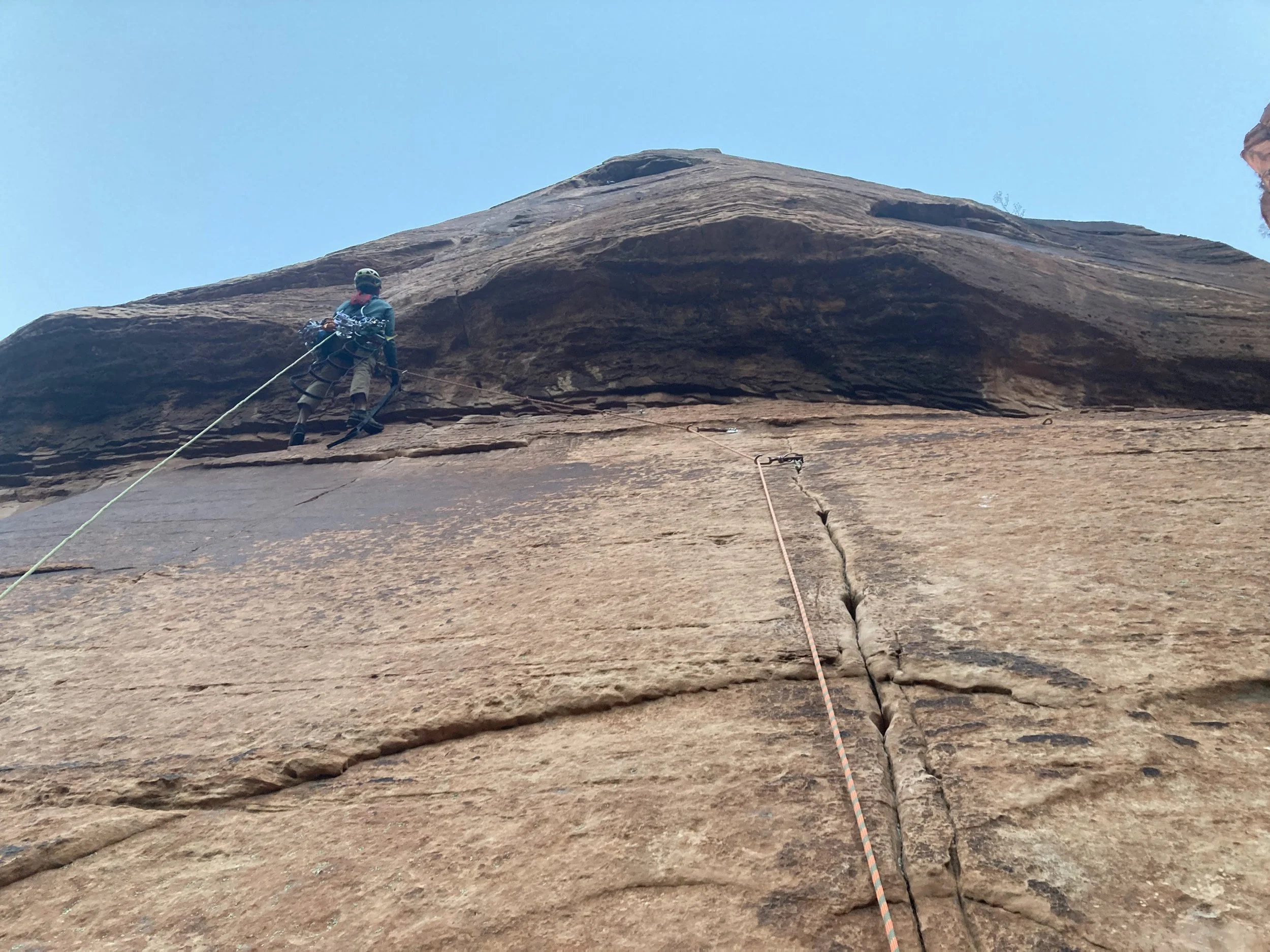
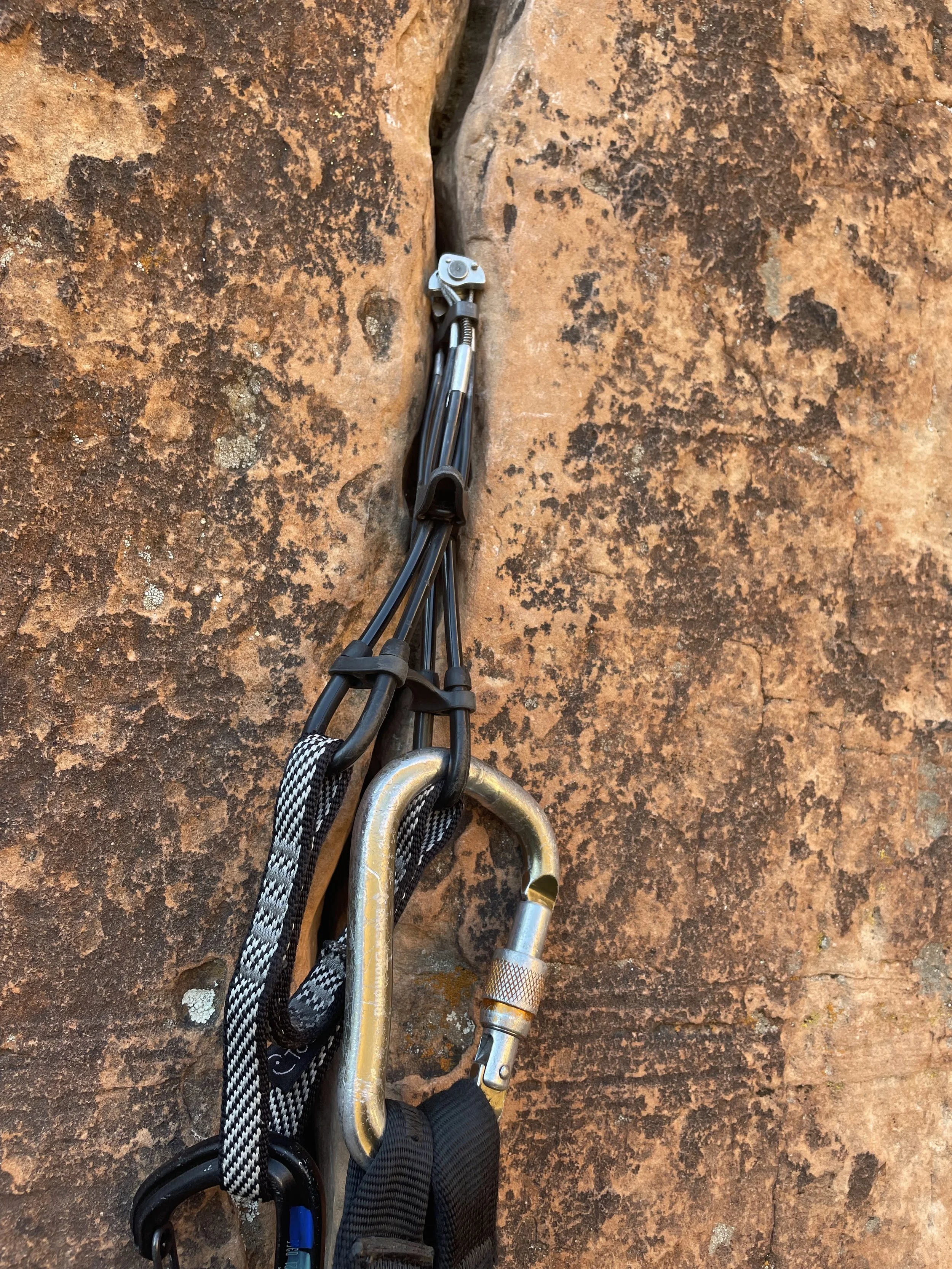
Twenty feet into an eighty foot lead up slabby face climbing I called out to Jason, "where is the damn hand crack?" I placed what would be my least piece of substantial gear before the anchor, a cluster of small cams in a thin seam aptly dubbed a life nest, and pushed upwards. In my many years of climbing I've certainly been off route before. It's a sickening feeling when you are certain the rock above you doesn't match your expectations, and there isn't a realistically safe way to descend back the way you came. I moved upward over unprotected terrain, until I was faced with one final move before the anchor. In a futile effort to apply duct tape to my anxious mental state, I placed a medium sized cam into a small section of fragile patina on the otherwise blank sandstone face, and in a panic pulled the final move before collapsing onto the belay ledge next to the chains.
Patina: thin, fragile outer layer of rock created by chemical and physical processes.
I secured myself to the anchor and peered back over the ledge with the clarity that comes with a 3/8 inch chain anchor. My mistake was obvious from above. I went left from the previous anchor when I supposed to go right. A huge mistake, that thankfully only cost us a few laughs. The pitch I climbed, some 30 feet climber's left of where I should have been, charted a snaking course through occasional sections of dark brown patina. I suspected when Jason weighted the fixed line to jug the pitch, most of my protection would pop out of the brittle rock.
I chastised myself for the blunder, set up the belay, and got to work hauling. On a wall, you're always busy.
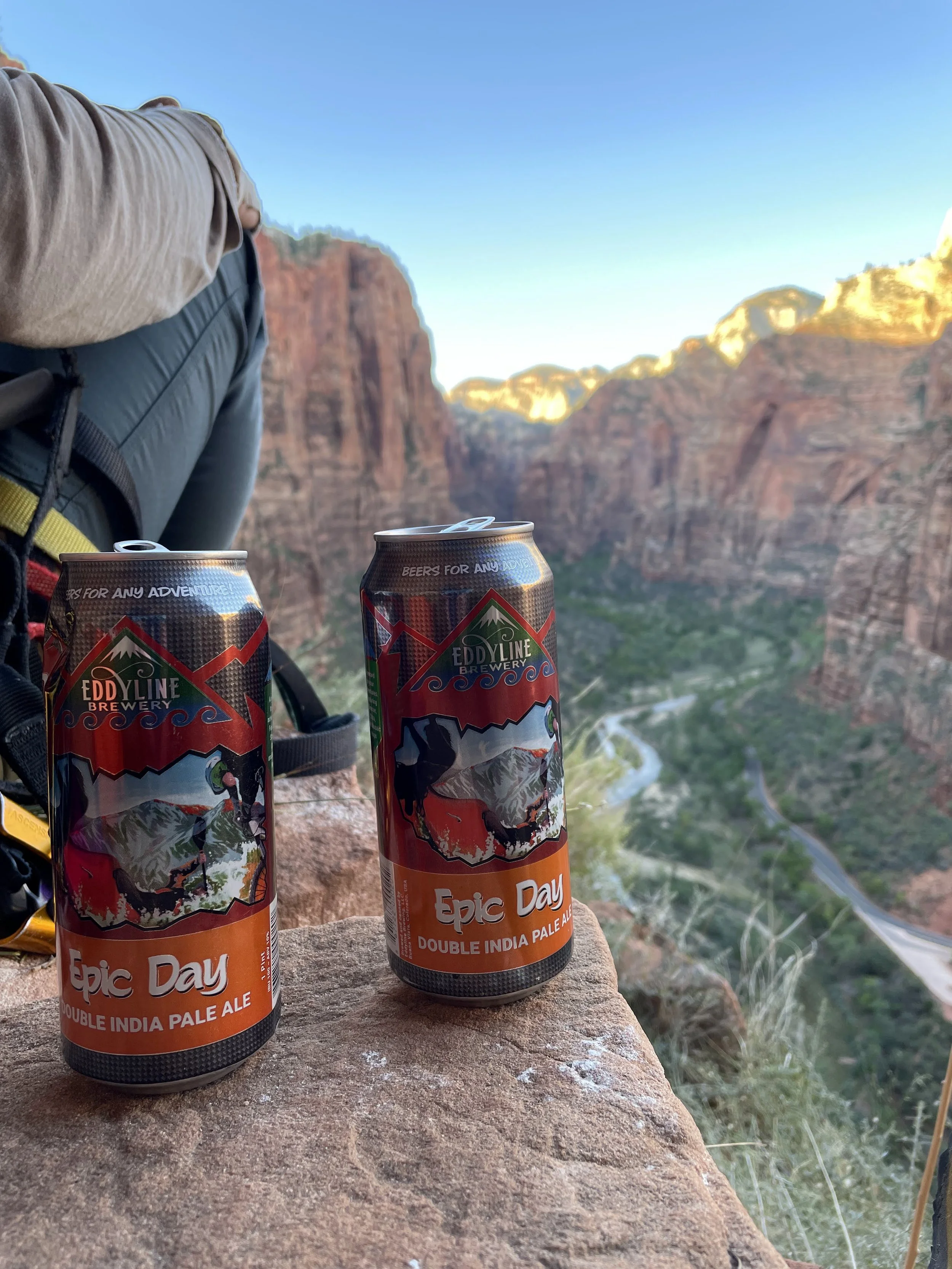
As I opened a lukewarm beer from the haul bag 15 minutes later, I felt this attempt at Touchstone was toast.
"Mike!" Jason hollers from below as he cleans the pitch. "In case no one has told you today, you're a hell of a climber and damn good friend."
"Only half true," I mumble to myself.
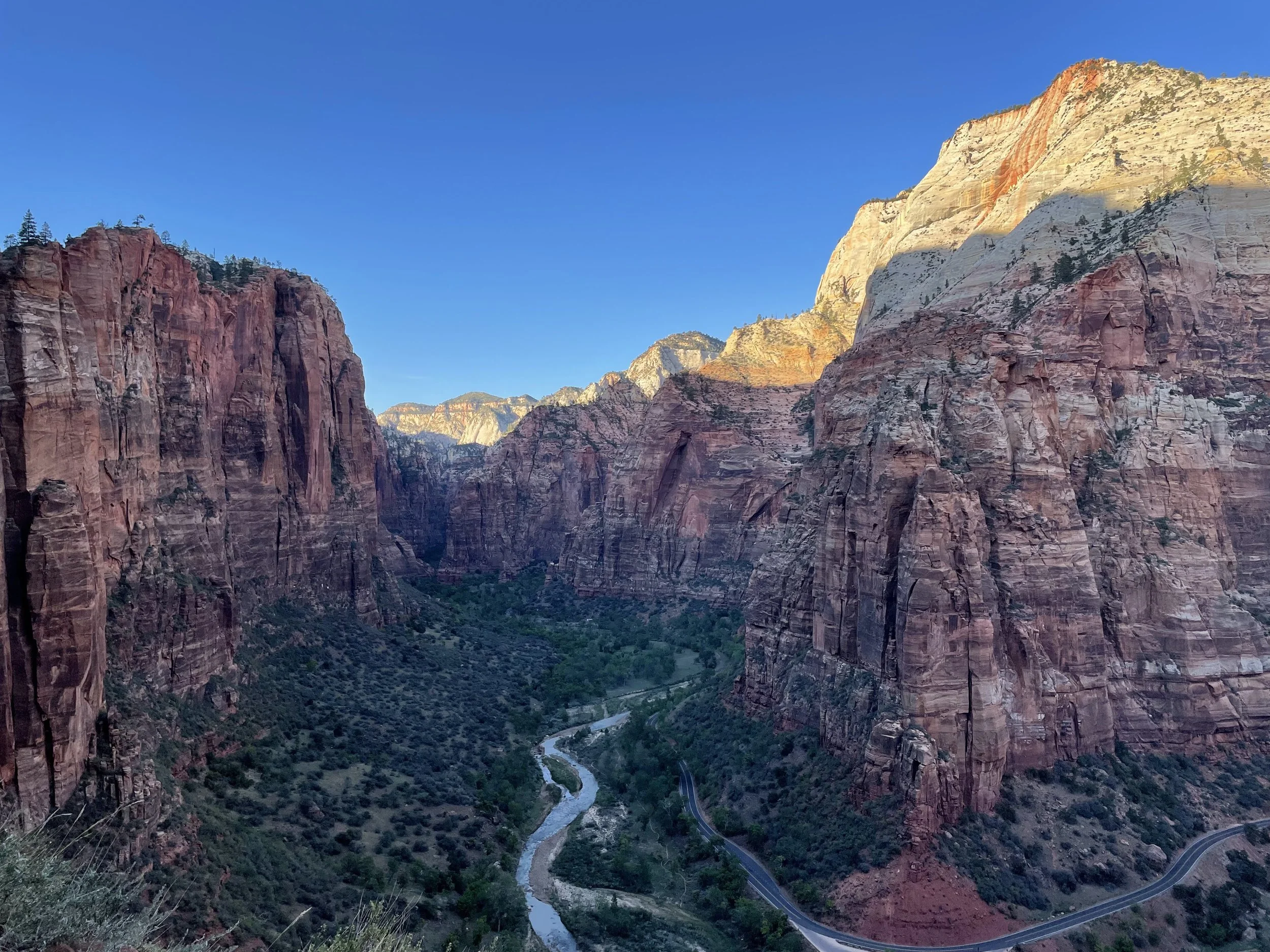
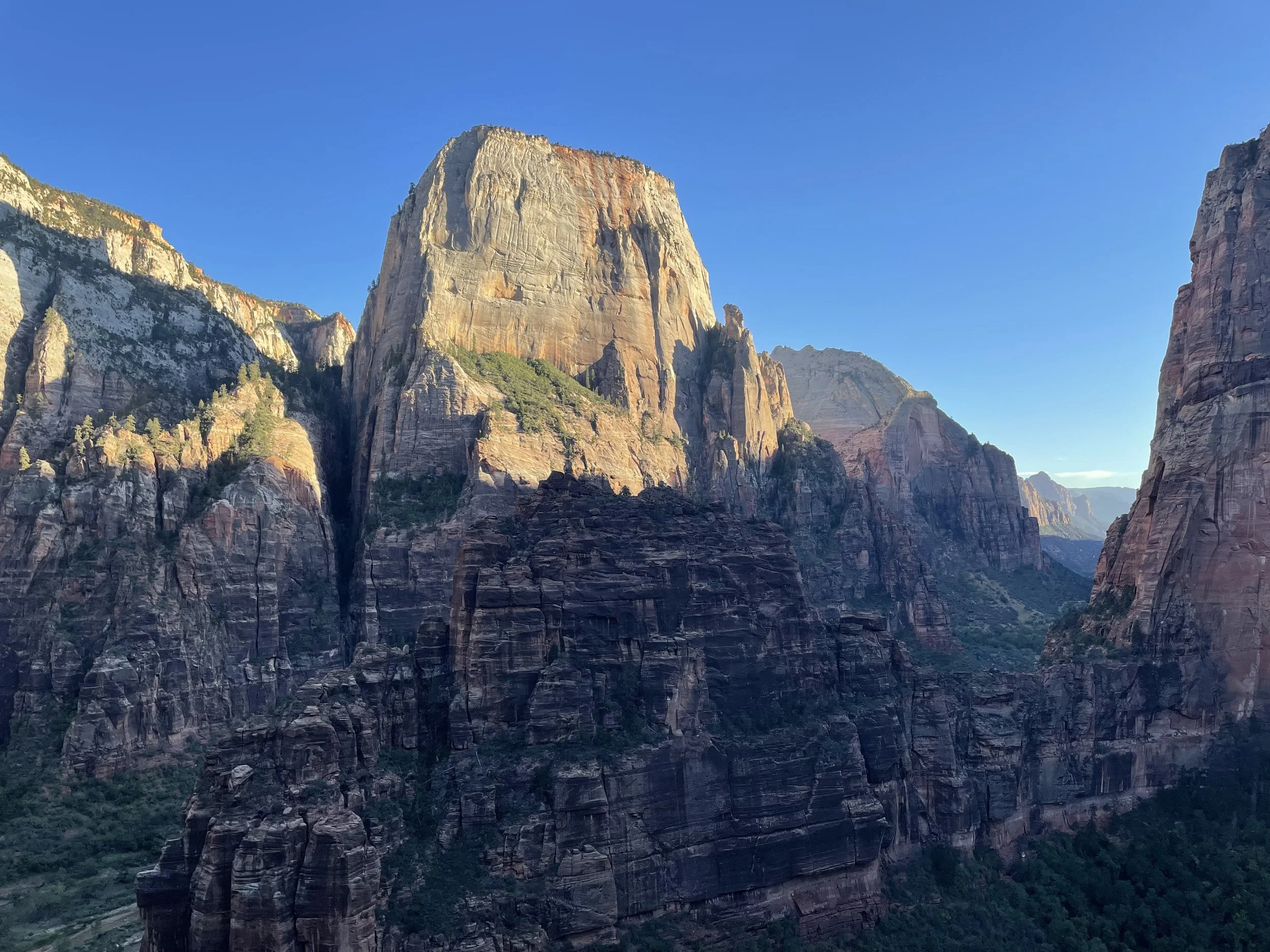
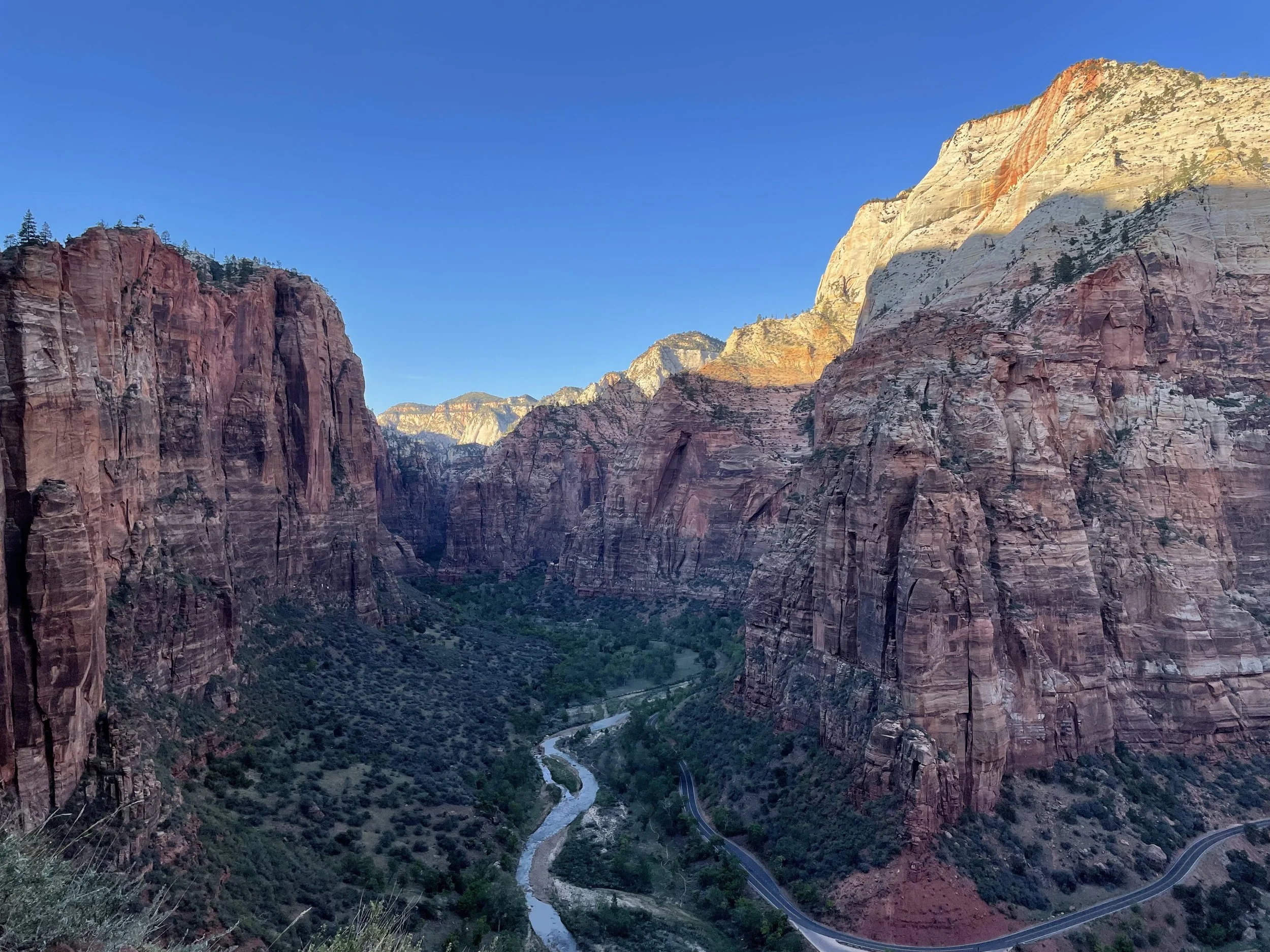
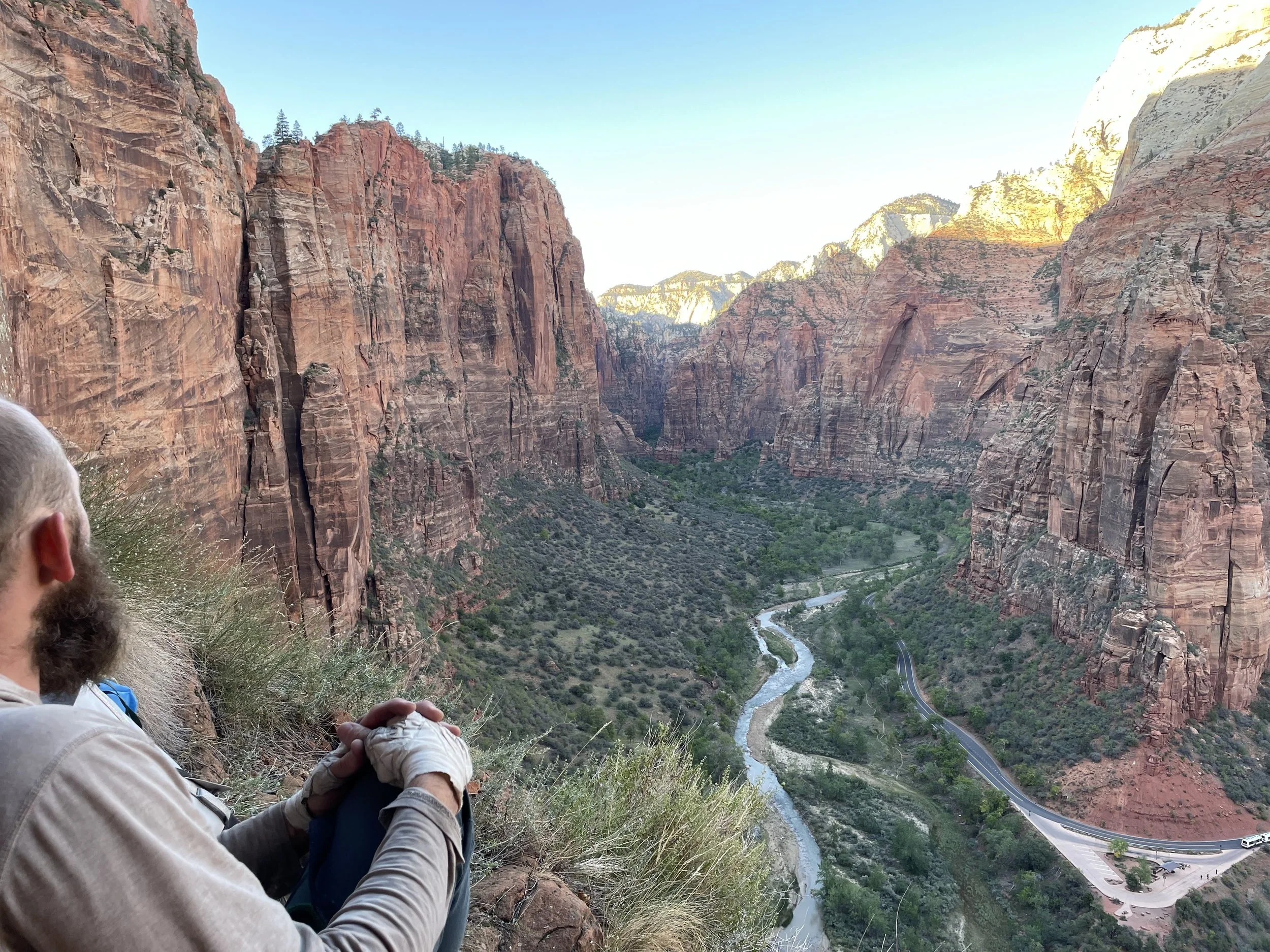
Evening underneath Angel’s Landing.
This story starts much the same as many of my other big adventures. Someone has a fleeting idea, and shares it with a friend. Once the idea is out in the world, there's no taking it back and it grows. It morphs into something with logistics, a date, an itinerary, and a support crew.
This idea was a simple one born out of a previous failure on El Capitan in Yosemite Valley. Myself, and three of the best climbing partners and humans I've compiled over the years, threw ourselves at The Big Stone. Our basic strategy was to recreate a previous success on the Regular Northwest Face of Half Dome. Our idea was doomed from the start. We assumed the wildly different trajectories of our four lives over the three years since we climbed Half Dome together wouldn't be a factor. It was an easy mistake to make.
Jason and his wife welcomed their first child nine months after Half Dome. My wife and I welcomed our first child five days later. Dylan threw himself into parasailing. Lee continued climbing harder than the rest of us. We were in wildly different phases of life, and the Half Dome dream team was in some ways gone. This realization from the postmortem of our El Cap trip led to the next crazy idea.
"Jason, what if we went after a big objective with just two of us?" I asked one day. I knew full well the sequence of events this would unleash. Ideas morphed into logistics, dates, itineraries, and finally, we cleared our flight plan with our true support crew: our families.
Jason and I arrived in Zion National Park in October 2022 with immense levels of excitement. We felt as fit as two dads can; we were dialed in with our systems and most of all in sync mentally. Our first stop was the backcountry permit desk, where any climber in Zion intending to spend the night on a wall must stop for the obligatory conversation about human excrement.
"You guys realize it just rained, right?" the woman behind the counter asked us incredulously. The canyon walls of Zion are great towering piles of sandstone, rock formed over millions of years by the compaction of grains of sand. Water and sandstone don't mix, obviously. One of my most beloved phrases of rock climbing is "sandstone is neither." We were not to be deterred. We assured the ranger that we had, in fact, noticed the rain as we walked through the park, and also that we didn't expect to get on the wall for another 24 hours. More than enough time for the Utah sun to work its evaporative magic. After a quick discussion of our plans for the fate of our future bowel movements, we were on our way, permit in hand.
We crashed somewhere in the desert outside of Springdale, and after packing our gear while enjoying the fares of the local pizza shop, spent a sleepless night thinking about wet sandstone.
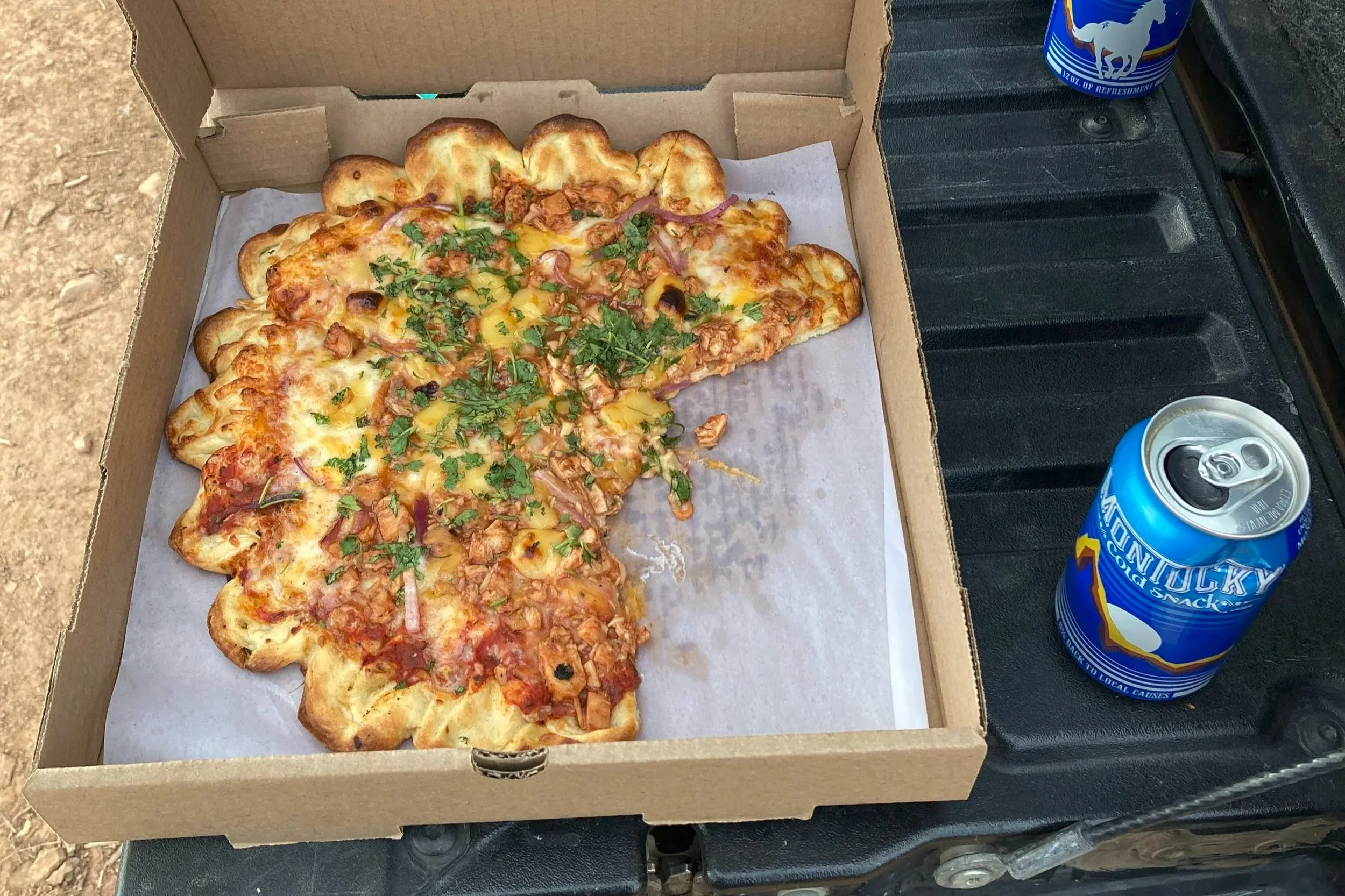
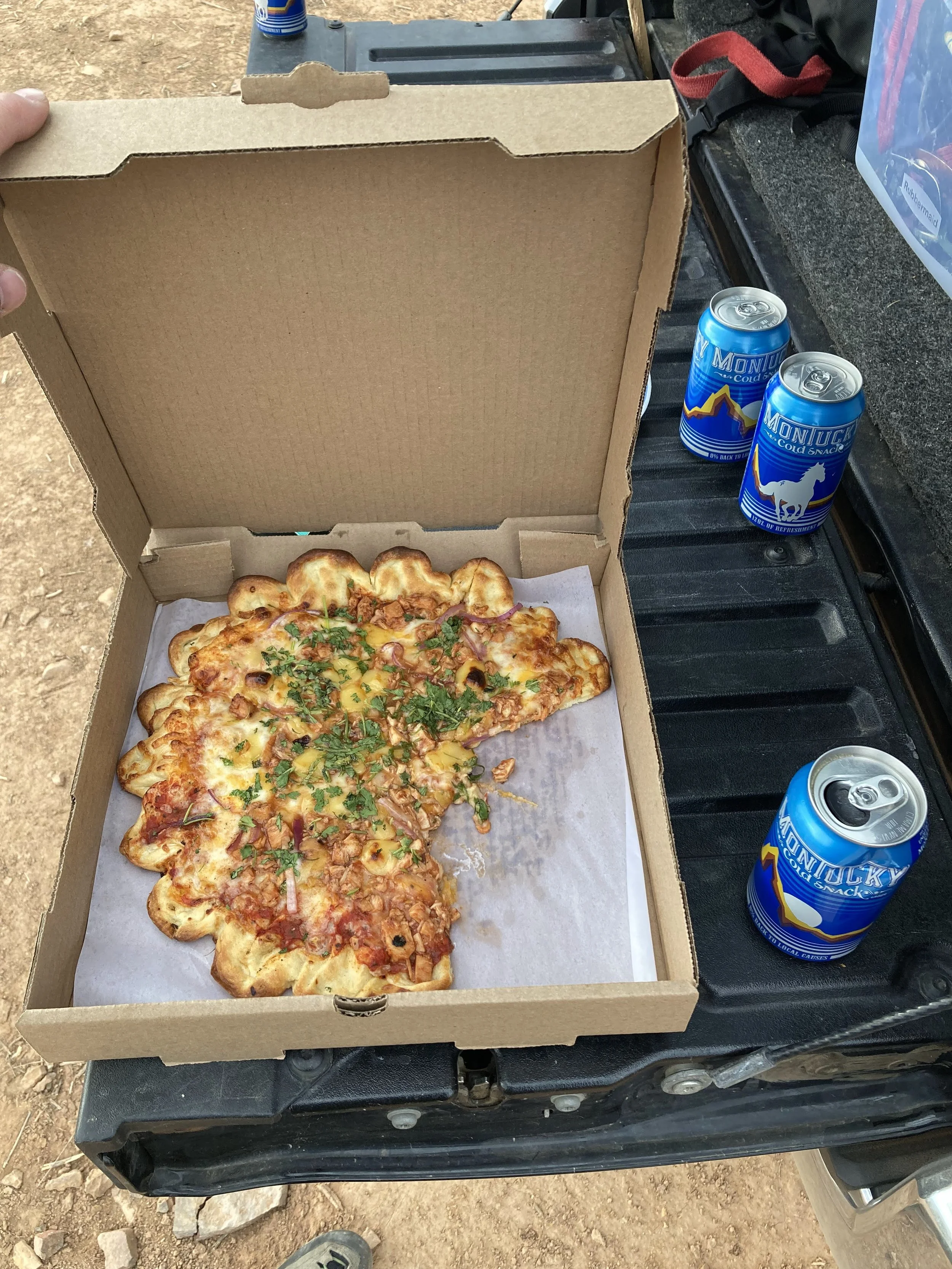
Pizza and beer belong on a tailgate.
Our first day in the park went beautifully. We were throwing ourselves at the Lowe Route on Angel's Landing. From our vantage point amidst the bushes and sand covered cracks of the first four pitches, we could safely say this route was seldom climbed. For two dads firmly convinced aid climbing was the style of climbing best suited to our current physical condition, we surprised ourselves by free climbing through four pitches of dirty Zion 5.9 unscathed.
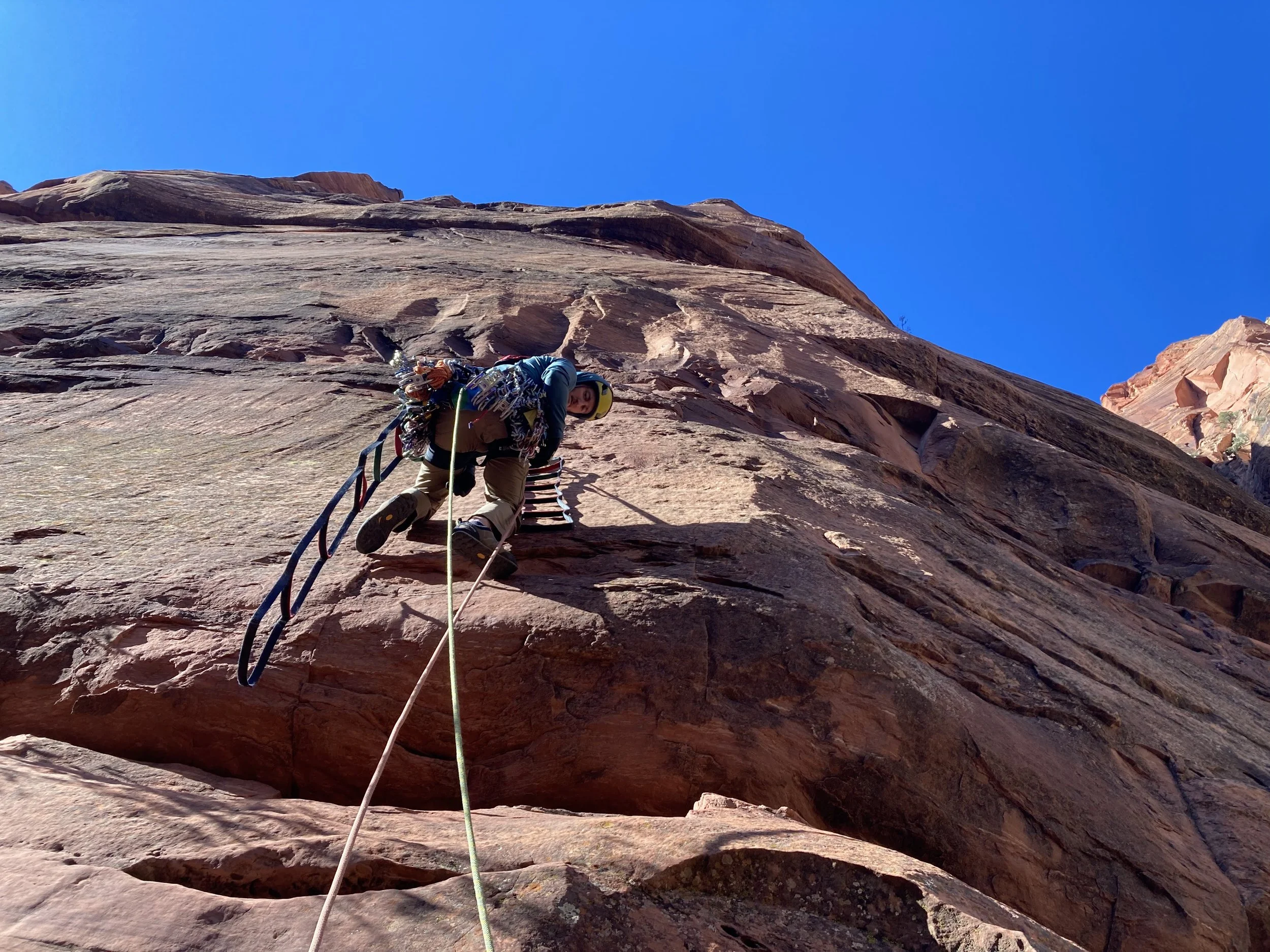
Aid climbing: using gear (cams, nuts, pitons) placed in cracks in the rock to pull yourself upwards. Free climbing: using your fingers, hands and toes to pull yourself upwards.
We arrived at the bivy ledge in the early afternoon, with the day's biggest challenge still ahead of us. Due to the traversing nature of the four pitches, and the potential for loose rock, we left the haul bags at the base. We would descend the rappel stations from the bivy ledge to the ground, retrieve our bags and reascend our fixed lines back to the bivy ledge. If there was one thing we were confident in, it was our ability to jug and haul.
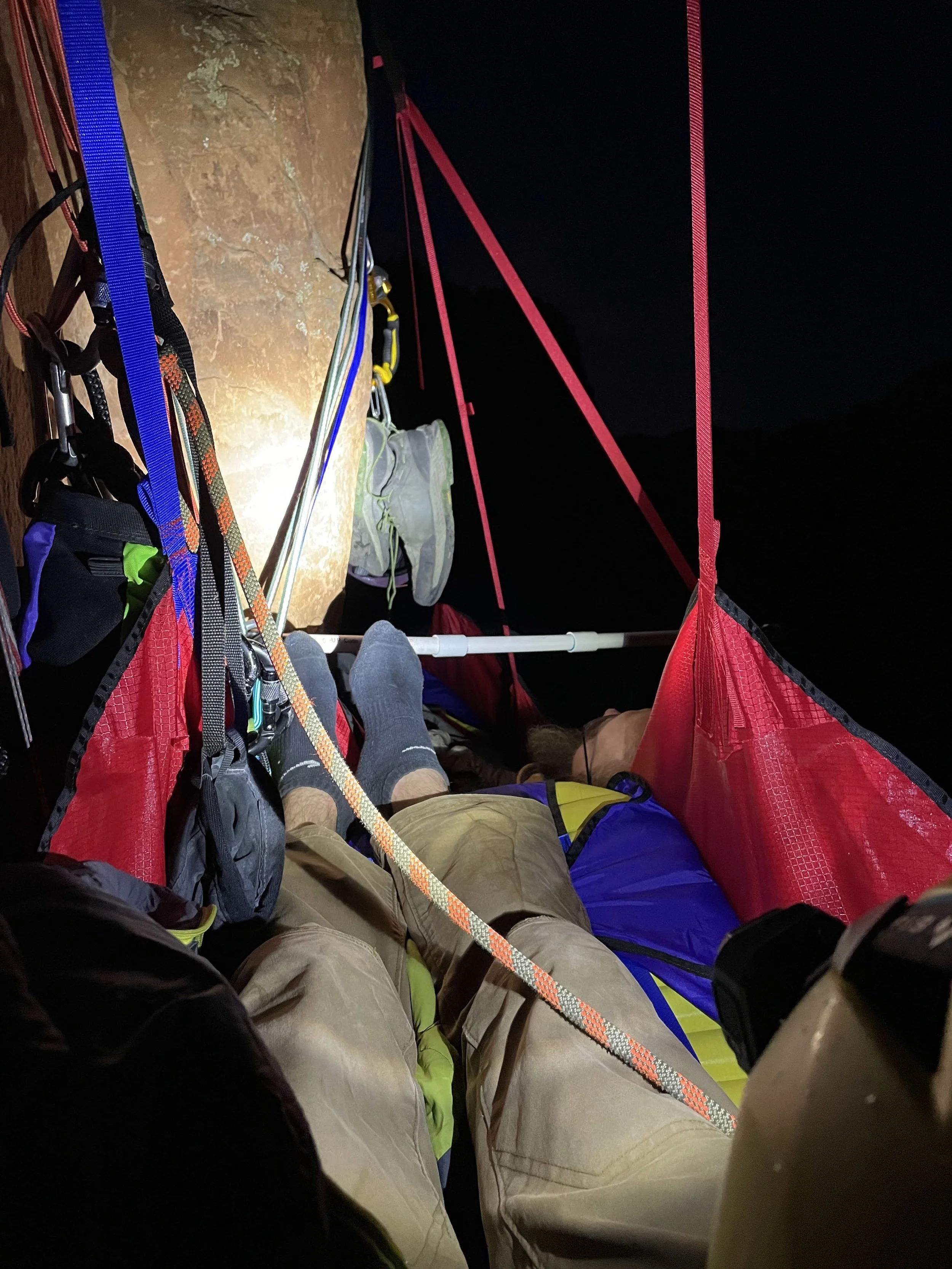
We returned to the bivy ledge with our food and gear in time for dinner. Our reward for the day's effort was a world class sunset perched 500 feet off the ground in the best free camp site in the park, complete with two 16 ounce IPAs. As we watched the last tour bus roll out of the canyon at dark, we settled into our sleeping bags for what would surely be a perfect night of sleep. The infamous critters of belay ledges the world over had other ideas.
After a mostly sleepless night spent fending off rodents intent on stealing our food by whatever means necessary, morning came and stole whatever confidence I was carrying from our success of the previous day. I began the first crux aid pitch of the route, and from 20 feet above the bivy ledge, I began having an internal discussion about how I preferred my femurs to remain inside my skin. After returning to the belay ledge many minutes later, Jason wrapped me in a hug. "I didn't want to go up there either," he said.
With the clarity of purpose that can only come with having small children at home we proudly tucked tail and descended with all four femurs intact.
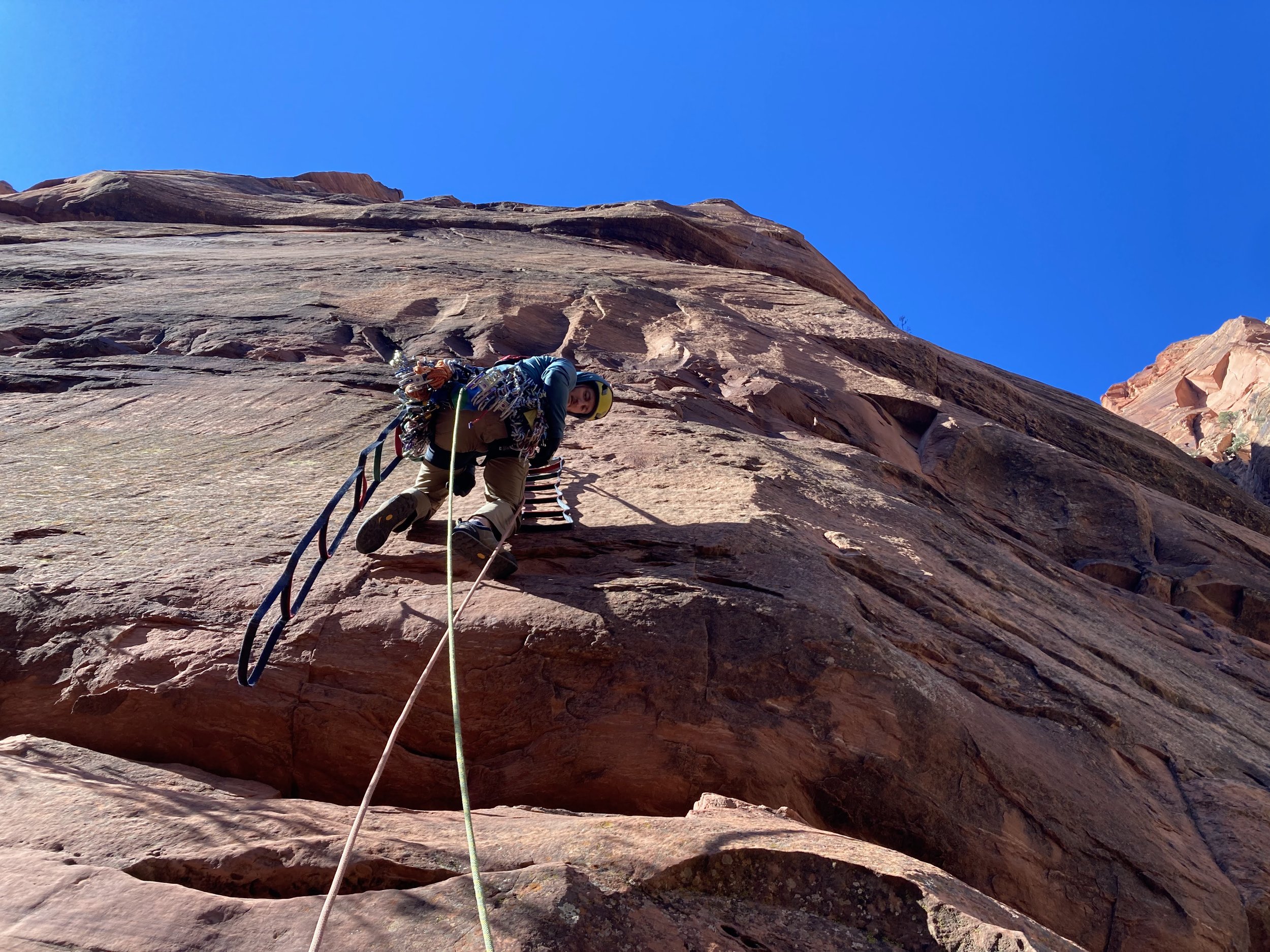
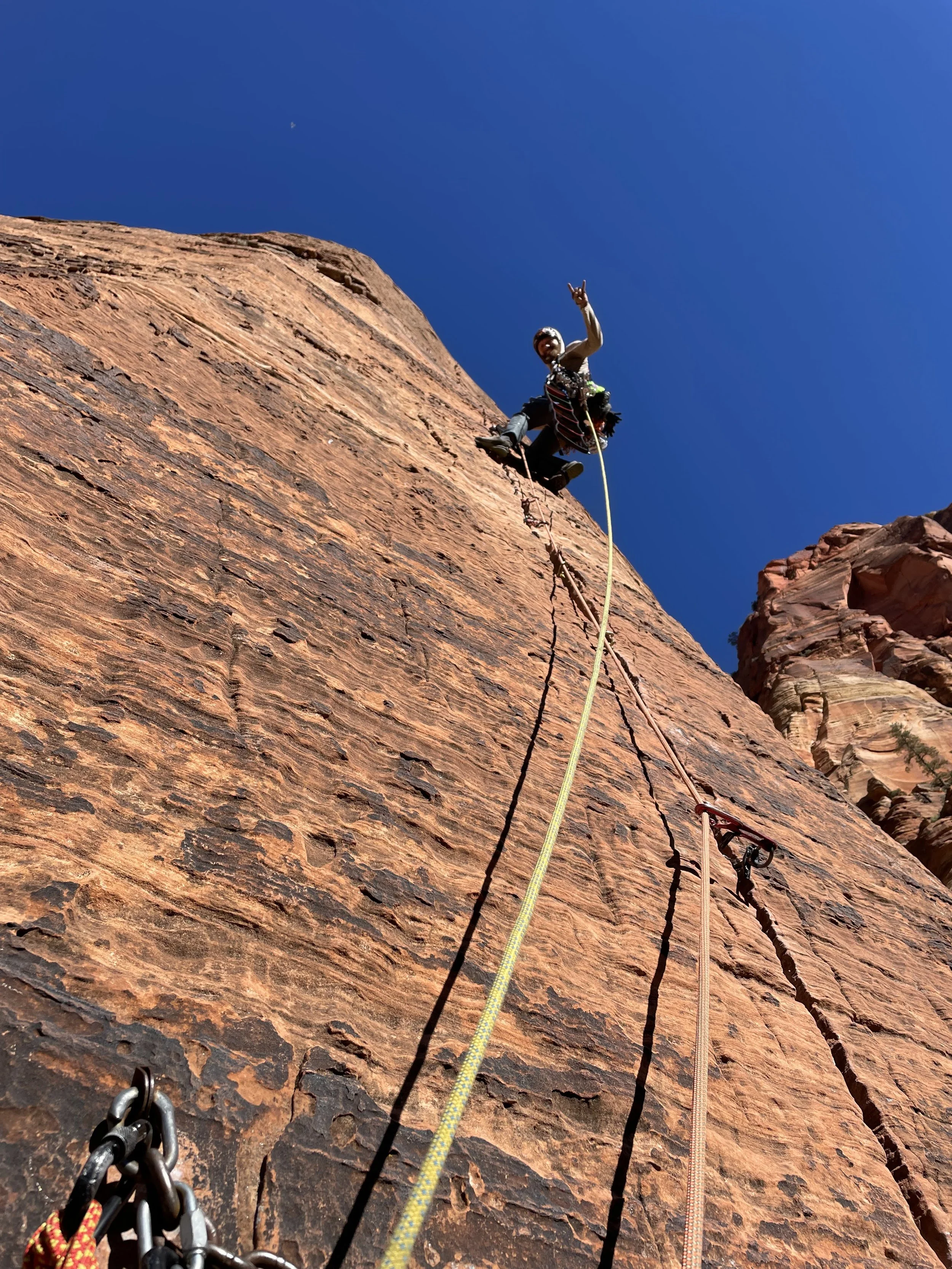
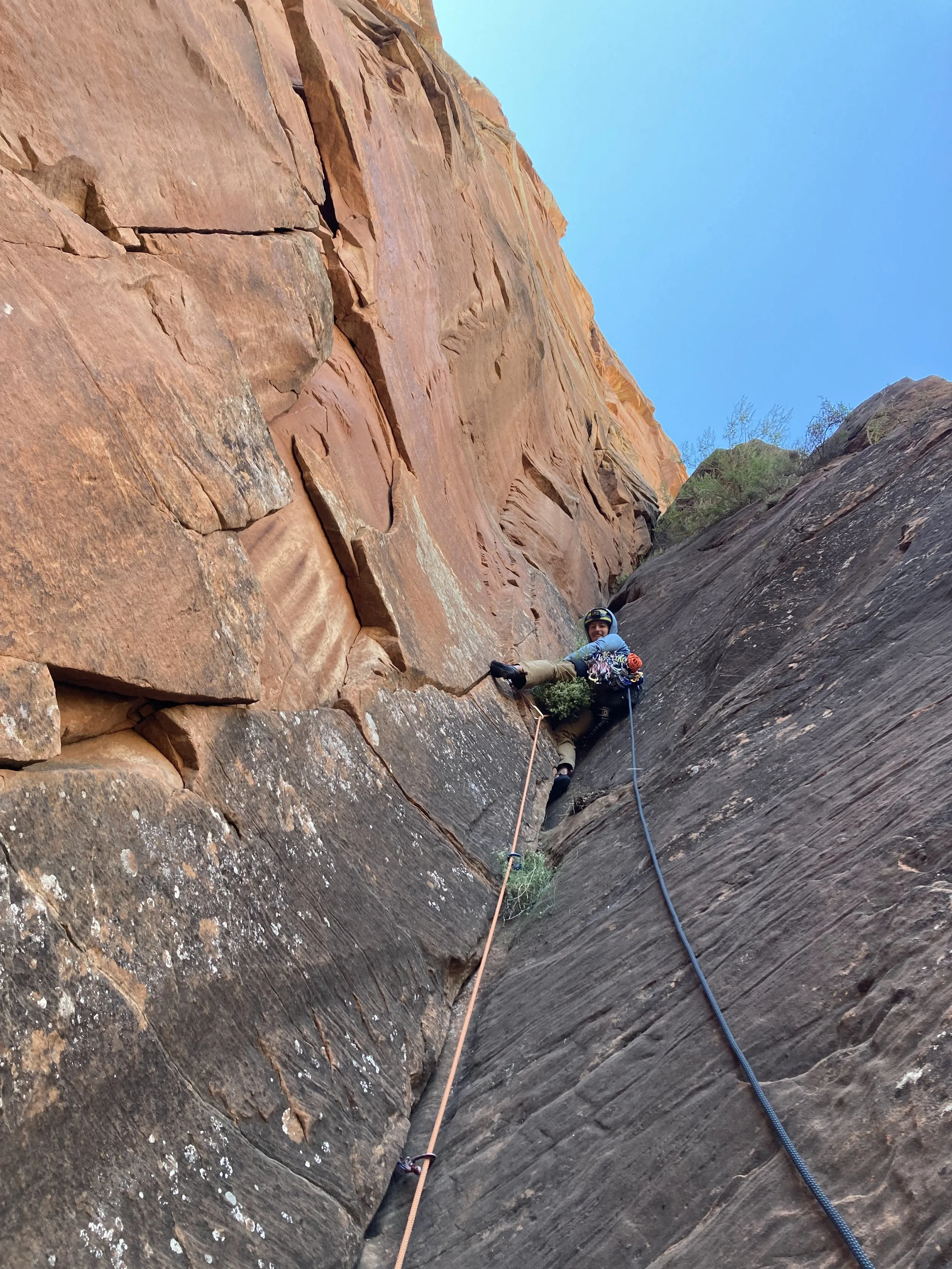
Cruising up the first pitch of Touchstone.
A day later, on a much more approachable and less adventurous route, we were once again saying the "b" word. In climbing, as in many sports, there are words that you never utter aloud. "Bail" is to climbers what "wind" is to river rats. Once uttered aloud, it eeks its way into your brain like a bacteria, leaving fear and doubt in its wake. We could have gone the way of the true expeditionary heroes of climbing, and pushed beyond the boundaries of our safety thresholds, physical abilities and mental fortitude. But here's the thing: we're dads.
We're not out to prove anything about climbing to anybody. We're lucky enough to occasionally cast off for several days and expend ourselves high up sheer cliffs in beautiful places. We're lucky to have families that support us, and we're lucky enough to have partners who are willing to climb within the reasonable limits of the group - to guarantee everyone in the group reaches the most important summit: home. Neither of us had to say the "b" word.
"You know, if we get a move on, we can make it down in time to catch the last bus out of here," Jason said.
"No rush; no accidents," I said.
"You know it. Hand me a beer," he replied.